A place for everyday things
Woven Storage Baskets: Measure the Shelf and the Things Inside
Choose baskets by their usable interior, handles, shelf clearance and everyday purpose, with a worked fit example.
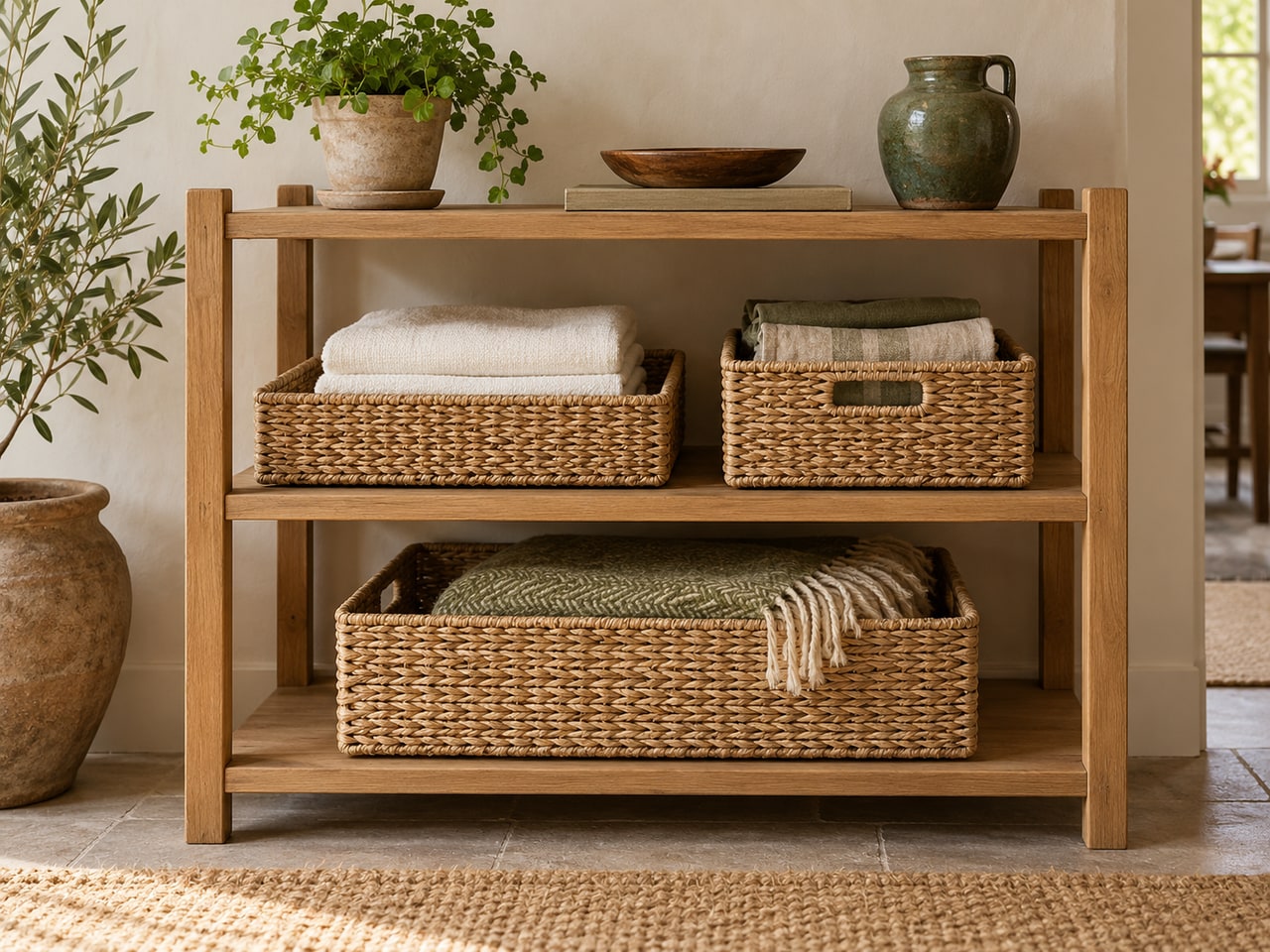
A basket earns its place when it makes a familiar task easier. It might hold clean towels, spare cushion covers or the bags that gather near the door. The useful measurement is not just the basket’s advertised width: the contents must fit inside, and the whole basket must move easily through the shelf opening. Start with the task, then work outward.
Sort the contents before measuring the container
Gather the items that belong together and remove things that should live elsewhere. Fold towels the way you will actually store them, coil a spare throw loosely, or stand the bags upright. Measure that real group. A storage plan based on an empty shelf can leave you with attractive containers that never hold the intended contents.
Decide whether you need open access, a lid or separate small compartments. Frequently used items should not require unpacking a second layer every time. A basket for occasional spare textiles can work differently from the one holding the dog’s walking things or the household’s everyday gloves.
Measure the opening as well as the shelf
Record the usable width, depth and height of the shelf, then check its front opening. A cabinet lip or frame can be narrower than the space behind it. Include door hinges, shelf supports and anything that projects into the opening. The basket must pass through that smaller space when filled.
For a worked example, a shelf measuring 30 inches across could appear to fit two 15-inch baskets exactly. That leaves no allowance for uneven weave, handles or fingers. Two 13-inch baskets total 26 inches and leave four inches to distribute, but the depth, height and real outside dimensions still need checking.
Separate outside size from usable inside size
A tapered basket can have a roomy top and a much narrower base. Ask for inside dimensions at the point where your belongings will sit, particularly for books, folders or folded towels. A thick rim or liner reduces the usable space even when the listed exterior fits the shelf.
Check whether handles extend above or beyond the stated dimensions. A hinged lid needs opening room; a removable lid needs somewhere to rest. If the listing gives only one set of numbers, clarify what they describe before relying on them. Handwoven pieces may vary, so leave a practical allowance rather than planning an exact squeeze.
Match the weave to the things it will touch
Look for rough edges, gaps and projecting ends if you plan to store delicate textiles. A removable liner may help organize small pieces, but it also needs its own cleaning plan. Test an existing basket with an unimportant cloth before putting a favorite knit or fine fabric into it.
Choose storage intended for the conditions in that location. Do not assume a decorative woven basket is suitable for wet laundry, outdoor weather or food contact. Read the maker’s materials and care information, and keep damp items in a container designed for that job rather than treating all woven storage as interchangeable.
Think about the filled weight and the daily reach
A basket of spare covers is very different from a basket of books. Estimate the filled weight and check any stated handle limits and shelf capacity. Place heavier contents where they can be reached and supported comfortably. Handles that look substantial in a photograph are not evidence of a load rating.
Try the motion with a box of similar size before committing: pull it out, lift it, put it down and return it. Can you do that without scraping the frame or moving a chair? Label the front or use a simple contents card if several baskets look alike, so putting things away stays straightforward.
Repeat one detail and leave the rest useful
For a collected country look, repeat a warm woven tone or a similar handle shape across a small group. Every basket does not need to match. Different sizes can make sense when the jobs differ, provided the group has one visual connection and does not crowd the available shelf.
Live with one basket before filling the whole wall with them. If the contents overflow immediately, reconsider the sorting or the size. If the basket stays empty, it may be decoration rather than needed storage. Keep some open shelf space for a familiar object or simply for an easier daily reach.
A little pause before you finish
Before you call it finished
- The actual contents have been grouped and measured.
- The cabinet opening and shelf interior are both recorded.
- Inside size, taper, handles and lid clearance are understood.
- Materials, care and filled weight suit the task.
- The basket can be removed and returned without rearranging the room.
These are decorating ideas, with illustrative room concepts. This guide contains no paid retailer links. Read our editorial approach.
Back to all journal guides