A quieter end to the day
A Country Bed in Layers: Fit, Comfort and an Easier Morning
Plan sheets, a quilt or duvet, pillows and a finishing layer using actual dimensions and the care routine you want to keep.
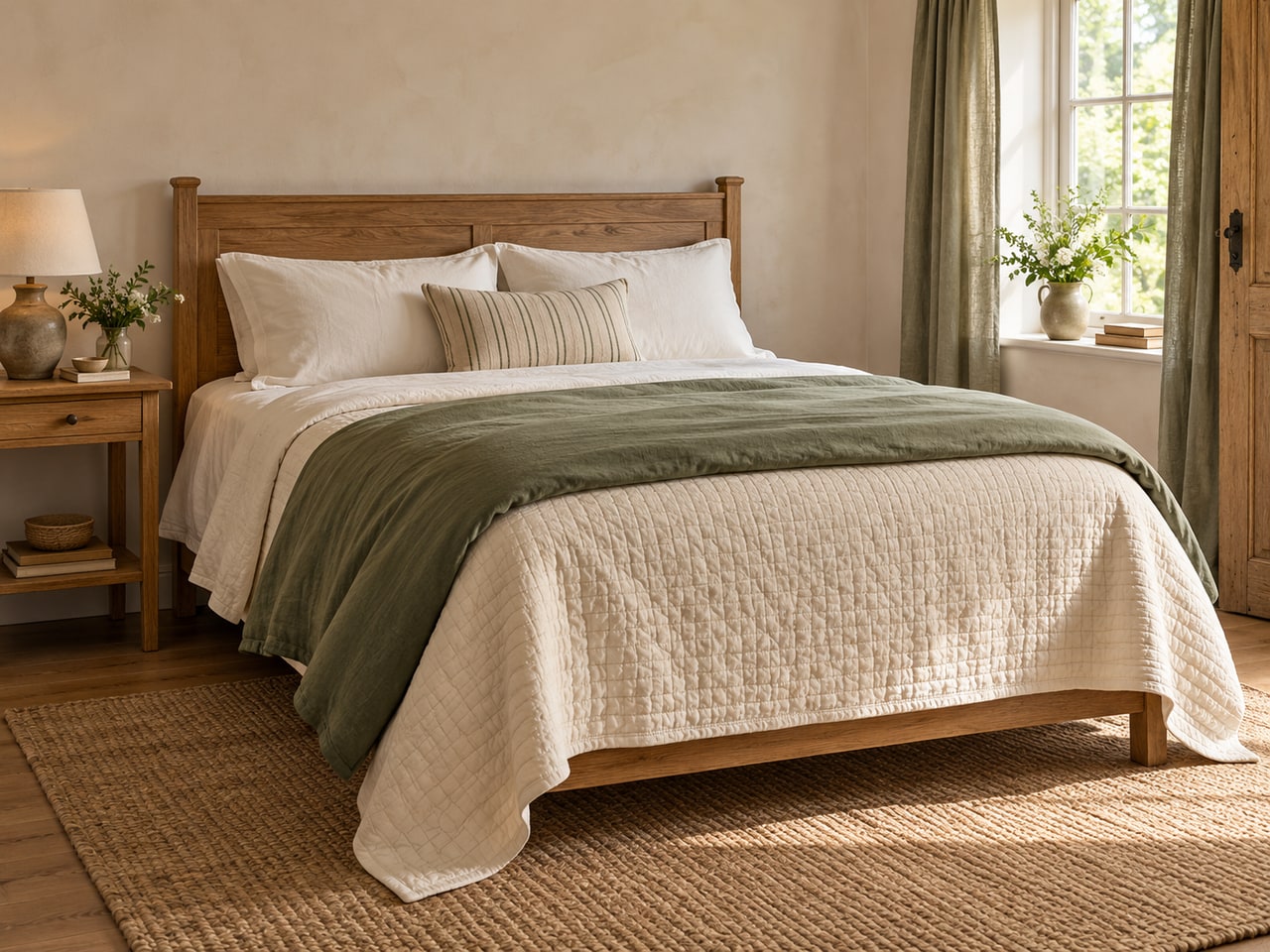
A welcoming country bed does not need every layer shown in a styled photograph. It needs sheets that fit, a covering you find comfortable, and a few colors that belong in the room. Begin with the bed’s actual measurements and your usual routine. Then add texture through a quilt, a woven cover or one simple folded throw.
Measure the mattress and the drop you want
Write down mattress width, length and total depth, including any topper you keep on the bed. Check fitted-sheet pocket specifications against that total. For the top covering, measure how far you want it to fall down each side, taking the bed frame and anything stored beneath it into account.
A simple example shows why the size label is only a starting point: a 60-inch-wide mattress with a desired 15-inch drop on each side calls for 90 inches across. That calculation does not settle the length or the effect of a thick insert. Compare each product’s actual dimensions rather than assuming every queen-labeled piece matches.
Choose the layers you use through the night
List the covering you currently sleep comfortably under, then decide what needs changing. You might prefer sheets with a quilt, or sheets with a duvet and cover. A folded blanket can be available for cooler evenings without making it part of the bed every night. The right combination is personal and can change with the season.
Keep decorative layers separate from the layers that do the work. If a heavy-looking bedspread always ends up on a chair, consider a simpler finish. Avoid choosing bedding on the assumption that one fabric or fill will feel right for everyone; inspect the stated materials and try the feel when you can.
Pair a duvet cover with the actual insert
Compare width and length for both pieces, and follow the maker’s fit guidance. A familiar size name is not enough. Check where ties, loops and closures sit, and whether the insert is included. A cover that fits the bed visually still needs to work with the insert you plan to use.
If keeping an existing insert, measure it laid flat without stretching it. Note its care label and condition before replacing the cover around it. For a quilt or bedspread, check whether the dimensions include any decorative edge. Record the numbers on the same sheet as the mattress so you can make a direct comparison.
Build the palette around one familiar piece
Use an existing quilt, a bedside wood finish or a favorite picture as the starting point. An ivory base, a muted green stripe and a little saddle brown can suggest country character without matching every surface. If the quilt is patterned, let the other large fabrics be quieter.
Vary the texture more than the color count. A smooth sheet beside a visibly stitched quilt or woven cover can provide enough contrast. Compare samples beside the headboard and curtain in your actual light. A warm neutral that works with pine may look different beside painted white furniture.
Plan laundry and storage before adding more
Read the care instructions on each layer and check your washer and dryer capacity guidance. A washable label does not by itself establish that a bulky item suits your particular machine. Choose a cleaning plan you can realistically maintain, including where the bedding will dry or be taken for cleaning.
Keep spare sets together in a breathable storage arrangement suited to their materials and your space. Label sizes if beds differ. Before buying another throw, fold the current spare layers and see how much storage they occupy. A useful bed is easier to manage when the linen cupboard has room to return everything clean.
Try the finished arrangement as an everyday routine
Make the bed once using only the layers you have decided to keep. Fold the quilt or duvet to a height you like, position the sleeping pillows, and add a decorative cushion only if it has a sensible place at night. Step back and check the balance with the bedside furniture.
Time and effort matter more than an exact cushion formula. If the arrangement takes more tending than you enjoy, remove a layer or simplify the fold. Keep the room’s personality in a picture, a textile or a wood finish, and let the bed remain straightforward to use and remake.
A little pause before you finish
Before you call it finished
- Mattress width, length and total depth are recorded.
- The desired side drop has been compared with real product dimensions.
- Cover and insert sizes and included pieces are confirmed.
- Each layer has a realistic cleaning and storage plan.
- Extra cushions and throws have somewhere to go at night.
These are decorating ideas, with illustrative room concepts. This guide contains no paid retailer links. Read our editorial approach.
Back to all journal guides