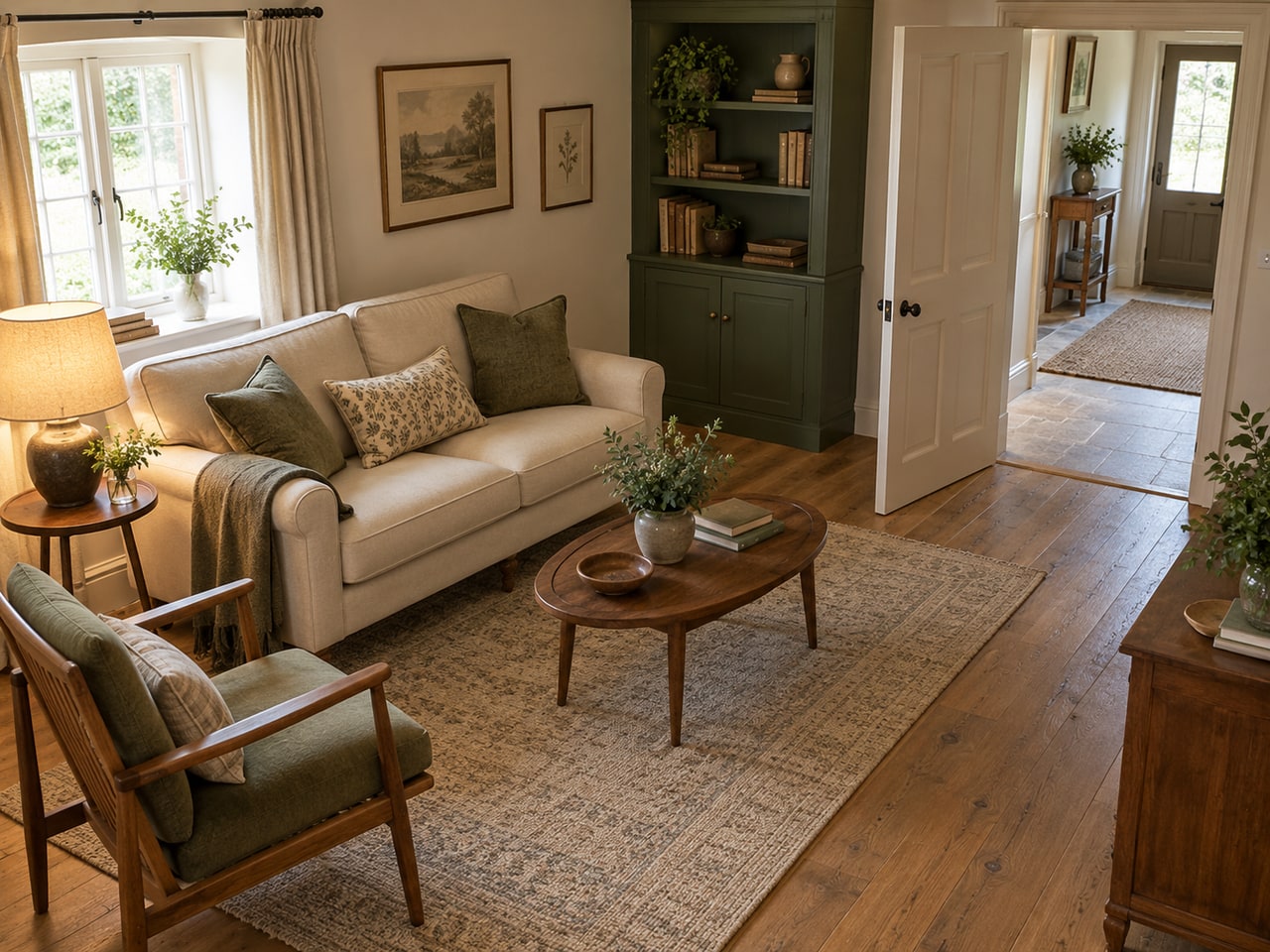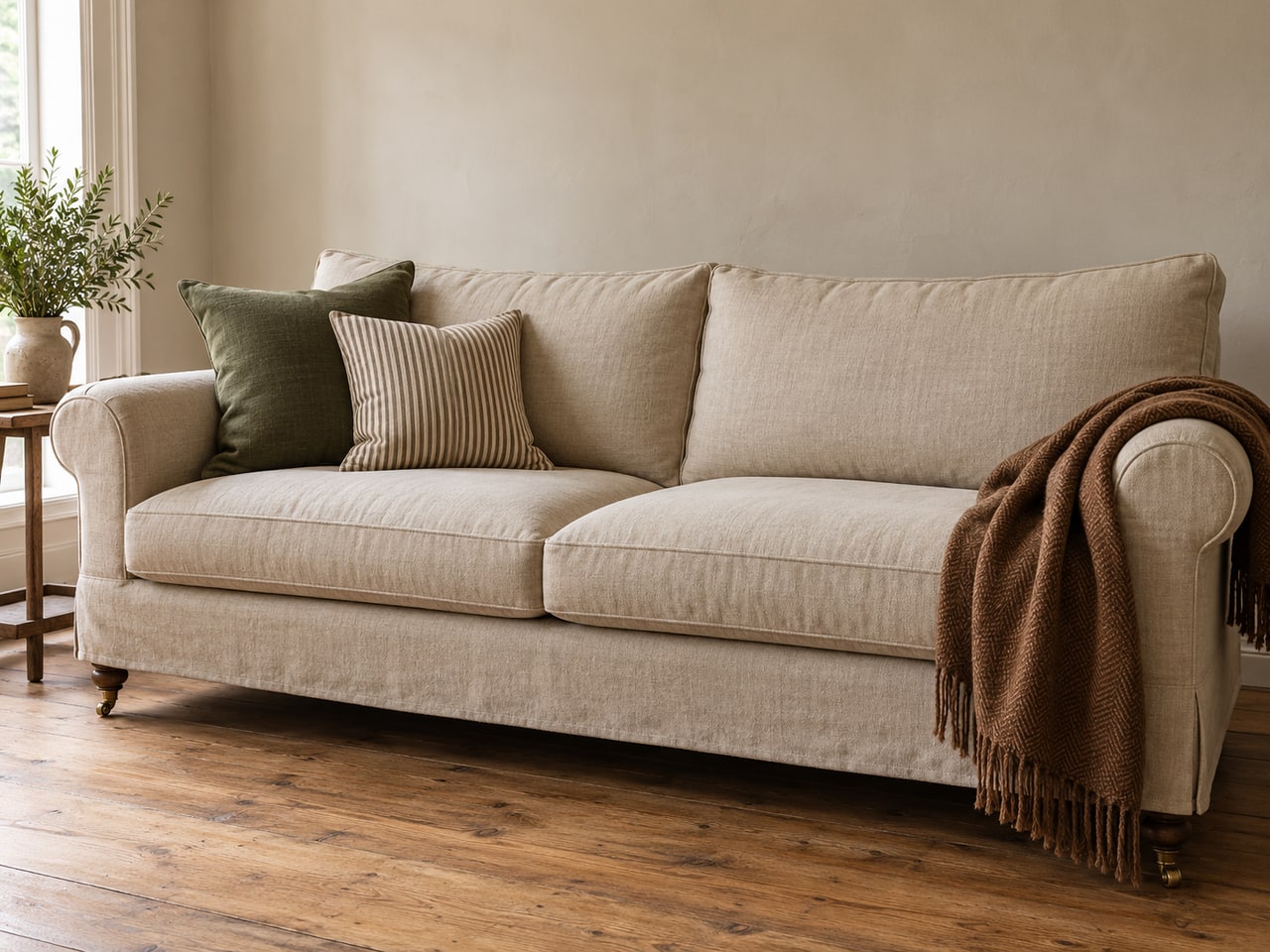
A room that feels grounded
Choose a Living Room Rug Size Before You Choose the Pattern
Compare rug footprints, sofa and chair placement, door clearance and care needs with a worked sizing example for a country living room.
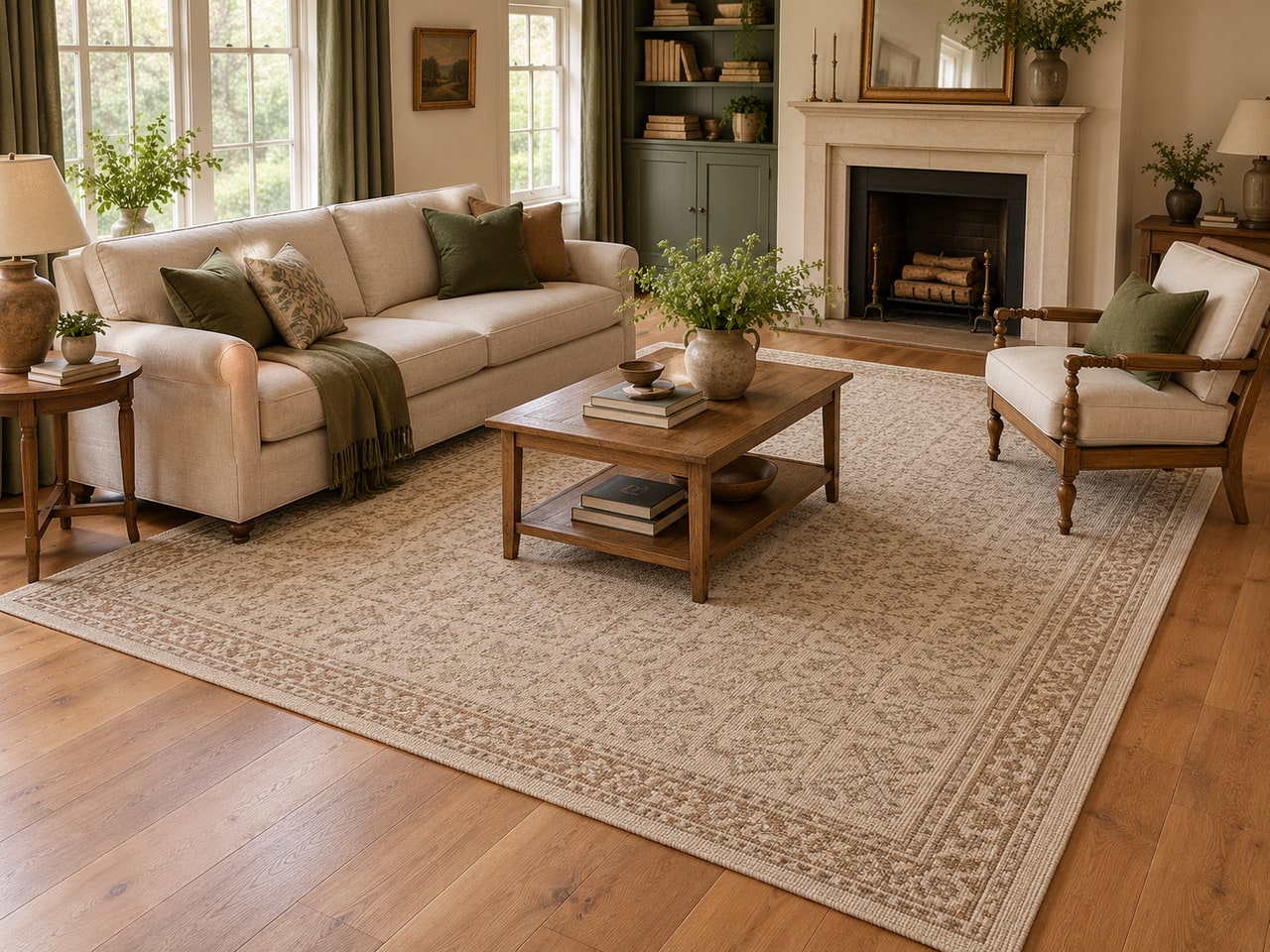
A rug can connect the seating in a country living room, but its pattern cannot correct a footprint that does not work. Measure the furniture group first, choose how the legs will relate to the rug, and test two sizes on the floor. Then consider the color and texture that suit your home. This guide uses examples to help you compare, rather than prescribe one size for every room.
Measure the seating group rather than the empty room
Record the outside width of the sofa, the position of any chairs and the space occupied by the coffee table. Note the room’s doors, hearth, vents and main walking route. The rug is part of that arrangement, so a room-length measurement alone does not tell you whether it will connect the seats.
Draw the furniture group from above and label the actual dimensions in one unit. Include furniture that moves, such as a reclining chair, using its maker’s operating clearances. Decide whether the rug belongs to the seating area or another zone; trying to make one small rug serve two separate groups can leave both feeling unresolved.
Choose a consistent relationship with the furniture legs
Two common starting points are placing the front legs of the main seats on the rug or fitting the whole seating group onto it. Either can work when the footprint suits the room. A rug floating beneath only the coffee table creates a different effect and may not connect the sofa and chairs as clearly.
Use the same basic approach for the main seats where possible, then judge stability and comfort with the actual furniture. Check the rug and pad thickness together. A leg partly balanced on an edge or a chair that catches when moved is a practical problem even if the outline looks attractive on paper.
Compare two footprints with simple arithmetic
Imagine an 84-inch-wide sofa centered along the long side of an 8-by-10-foot rug. The rug is 120 inches across in that orientation, leaving 36 inches in total, or 18 inches beyond each sofa end. Turn it so the 96-inch side runs along the sofa and that allowance becomes six inches at each end.
That example explains orientation, not a required border. Chairs, room width and the desired leg placement may make a different size more useful. Mark both candidate footprints with paper or surface-safe tape, testing adhesive first. View them from the doorway and from each seat before judging the pattern.
Check doors, edges and the walking route
Open every nearby door through its normal swing. Consider the finished thickness of the rug and its underlay, not just the rug’s flat outline. Keep edges from landing in a place where people regularly turn or where a movable chair repeatedly catches. Recheck the route with the people who actually use it.
Choose an underlay compatible with both the rug and the floor finish, following their manufacturers’ instructions. Do not assume every pad suits every floor. If the combination cannot lie properly or conflicts with a door, adjust the size, placement or product choice before adding more furniture around it.
Let the room’s existing fabrics guide the pattern
If the sofa and curtains are plain, a restrained pattern may provide a useful focal point. If the room already includes a strong check, floral fabric or busy artwork, consider a quieter rug. Pull one or two colors from the room rather than asking the rug to introduce an unrelated collection of accents.
Compare samples in the room’s usual light and inspect the stated material and construction. A woven country look can come from different fibers with different care instructions. Avoid choosing solely because a photograph looks soft, washable or suitable for pets; those qualities need checking in the actual product information.
Make the care plan part of the size decision
Check vacuuming, spot-cleaning and professional-cleaning instructions before committing. If a rug is described as washable, confirm its finished size and weight against the cleaning method and your machine’s capacity guidance. A care label and a practical plan are more useful than assuming a particular fiber will be effortless.
Record your selected dimensions, orientation and pad requirements, then check delivery and return conditions with the seller. A large rug is awkward to trial if the return process is unclear. Keep the floor-plan sketch so a future replacement can be compared with the arrangement you know works.
A little pause before you finish
Before you call it finished
- The sofa, chairs, fixed features and routes have been measured.
- Furniture leg placement is deliberate and stable.
- Two sizes and both relevant orientations have been compared.
- Doors and rug-pad compatibility have been checked.
- The material, care method and return conditions suit the household.
These are decorating ideas, with illustrative room concepts. This guide contains no paid retailer links. Read our editorial approach.
Back to all journal guides